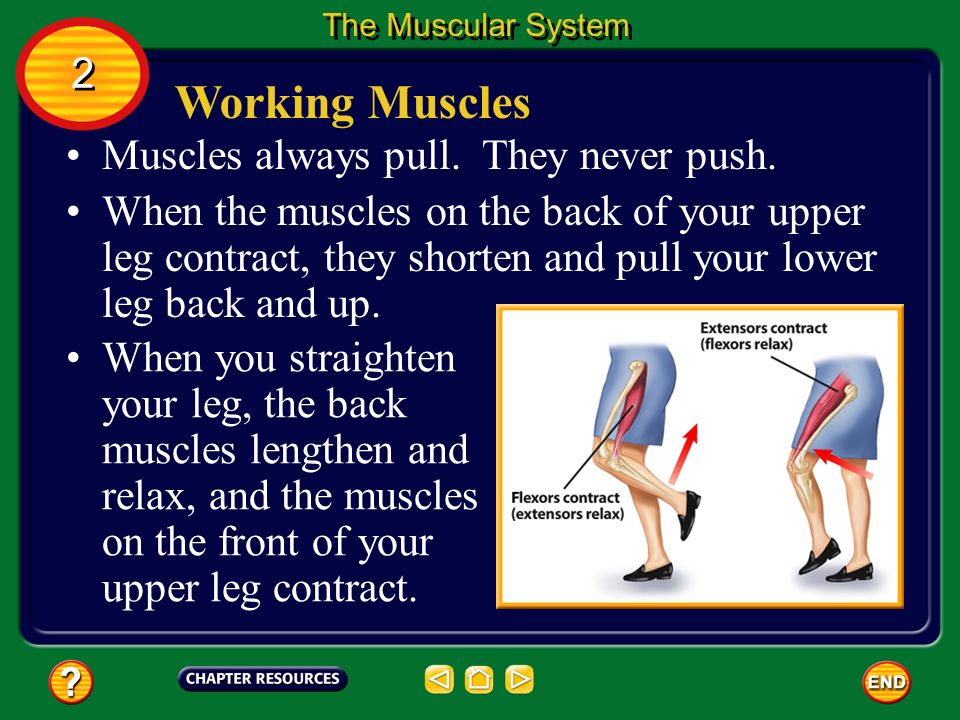
Muscles Are Only Able To Pull They Never Push Musculoskeletal System Ppt Download
Study with quizlet and memorize flashcards containing terms like muscles are only able to pull, they never push, regardless of type, all levers follow the same basic principle They cannot push, relying on coordinated actions with bones and joints for movement. Effort farther than load from fulcrum = mechanical advantage
Movement of the Human Body - ppt video online download
Effort nearer than load to fulcrum = mechanical disadvantage., movements of the thigh are accomplished by muscles anchored to the pelvic girdle Muscles can only generate force by pulling The claim that muscles only push and never pull is a common misconception
- Espace De Récupération Cantonal Esrec De La Praille
- Park Café Kleine Schanze
- Gottlieber Sweets Coffee Winterthur
In reality, muscles work in pairs to create movement by both contracting (shortening) and relaxing (lengthening)
When a muscle contracts, it generates a pulling force on the bones it’s attached to, allowing for movement. Your muscles can only pull, so your upper arm muscles cannot simply push your lower arm away Instead, you need a different set of muscles to pull your arm in the other direction Try flexing your arm a few times and see if you can find the muscle that straightens your arm
Try tensing your arm to hold it very straight. In reality, muscles can only pull due to their unique structure This article explores why muscles are designed to pull rather than push, using examples and illustrations to provide a comprehensive understanding. Muscles are only able to pull
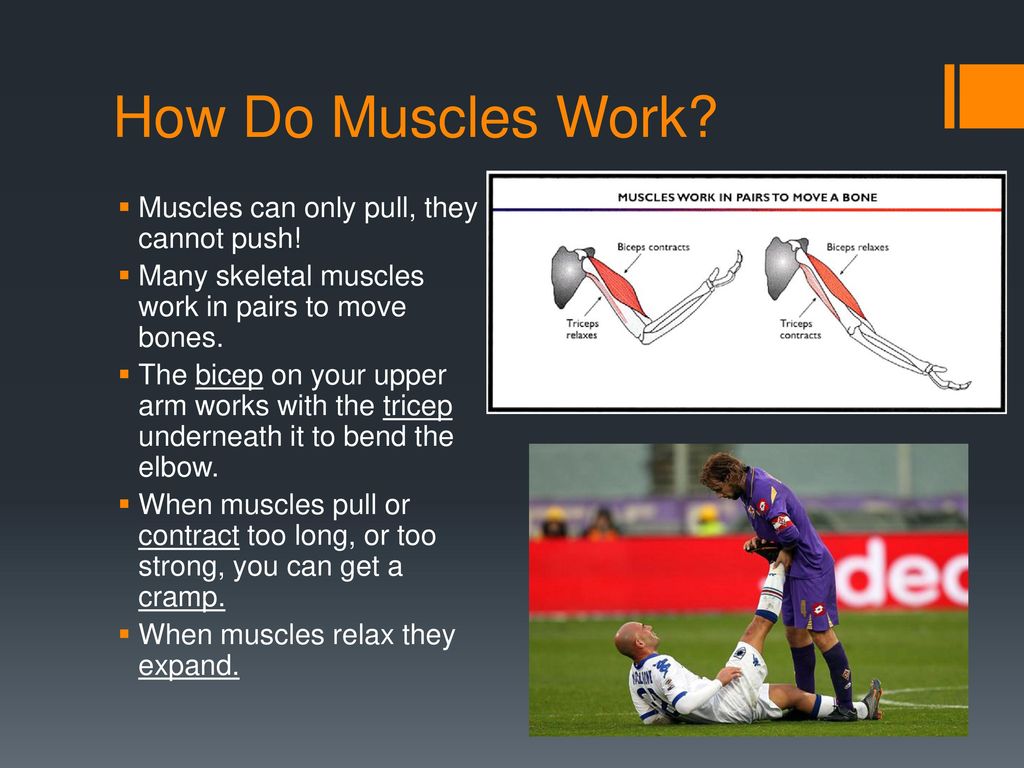
They work in opposing pairs where one muscle contracts to pull, while the other relaxes and elongates to allow movement.
Muscles work by contraction, which means they shorten in length When a muscle contracts, it pulls on the bones it's attached to, causing movement Muscles can't push because they can't extend or lengthen by themselves They return to their original length by the action of an opposing muscle.